 Day spa
 Japanese head spa
 Flower bath for two
 Matcha café & workspace
 Inside SERAYA
 Women-only stays
 Local concierge
 Villas & rooms
 Drivers & airport transfers
 Day trips
Bali Guide / Wellness & beauty
What is a head spa? The Japanese scalp treatment, explained
A head spa is a 60–90 minute cleanse and massage of the scalp, not the hair. What happens in a session, what it costs worldwide, and what it really does.

Prices in Japan, the US, the UK and Bali checked November 2026
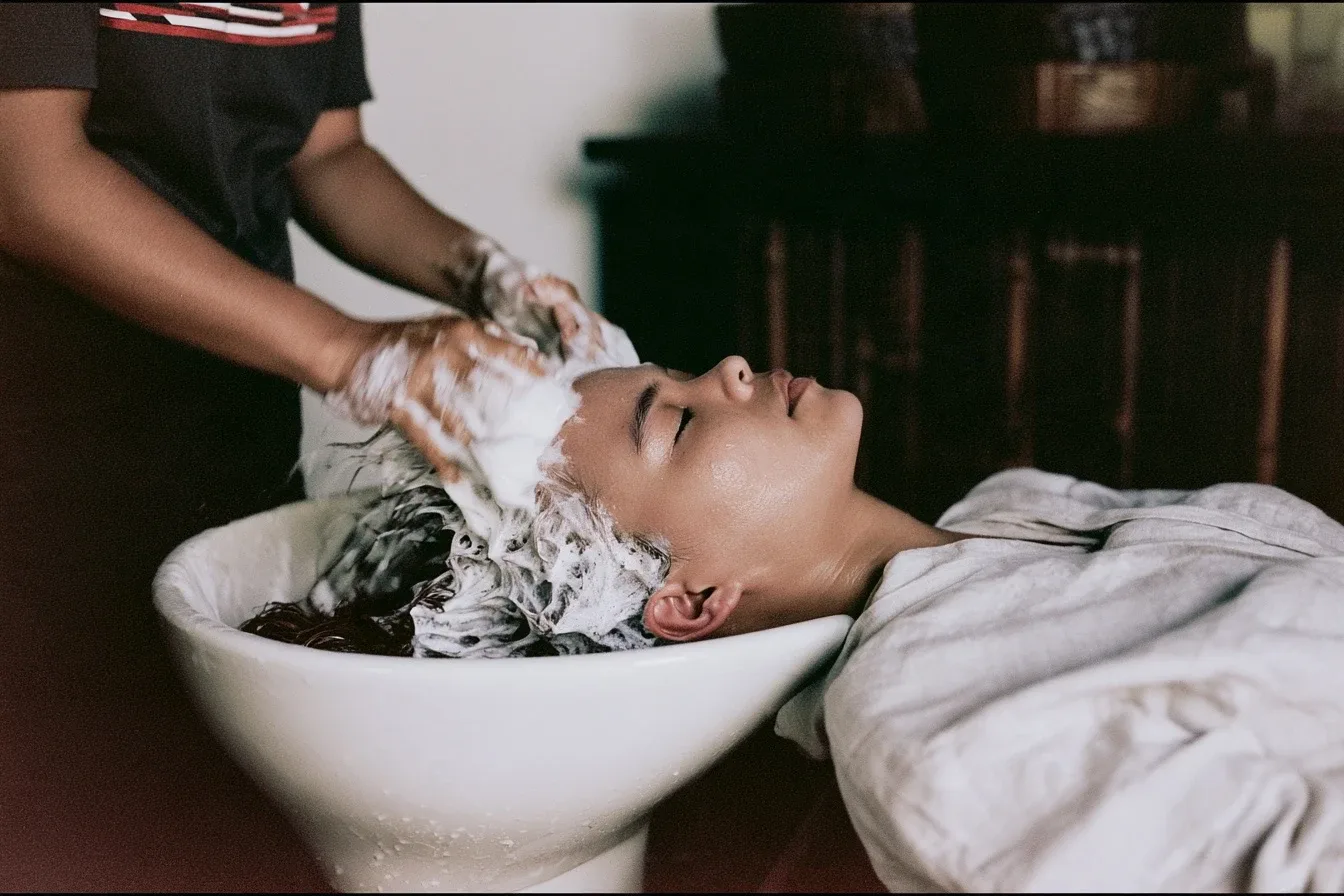
A head spa is a 60–90 minute treatment for the scalp rather than the hair: a scalp check, a double cleanse under warm running water, and a long massage of the scalp, neck and shoulders. As of November 2026 it costs roughly USD 50–180 in the US, GBP 50–200 in the UK, JPY 5,000–14,300 in Japan, and IDR 600K–1.7M in Bali — the widest price gap of any common spa treatment.
It is the fastest-growing salon treatment of the decade and also one of the most over-described. Here is what it actually is, what happens on the table, what it costs around the world, and which of the claimed benefits hold up.
What is a head spa, exactly?
It is skin care that happens to be under your hair.
Every other hair treatment works on the strand: conditioning it, repairing it, colouring it. A head spa works on the scalp — the skin itself — and treats the hair mostly as something to get through to reach it. That one difference explains everything else about the treatment: why it uses running water rather than a cream, why it takes so long, and why nothing is left coating your hair at the end.
The format came out of Japanese hair salons in the 1990s, where the long shampoo that traditionally opened an appointment grew into a service of its own. The Japanese term hedo supa is still used for everything from a 20-minute add-on to a two-hour ritual, which is part of why the name travelled faster than the technique.
What actually happens during a head spa?
Five stages, in this order. The names change between salons; the sequence does not.
- Scalp check. The therapist looks at your scalp — by eye, under a lamp, or with a small camera displayed on a screen — to see whether it is oily, dry, flaking or congested, and chooses products accordingly. This takes two or three minutes and is the step most often skipped by places using the name without the method.
- First cleanse. A clarifying wash that lifts the top layer of oil, sweat, sunscreen and styling product. You lie face up at a basin with warm water running.
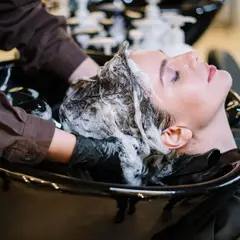
- Second cleanse and massage. The long part. A second, gentler cleanse is worked in while the therapist massages the scalp in sections, usually moving on to the neck and shoulders. In a 75–90 minute session this alone can run 40 minutes.
- Treatment and steam. A mask or serum suited to what the scalp check found, sometimes with warm steam to help it settle.
- Rinse and dry. A final rinse under running water, then a gentle blow-dry. Your hair should feel light and your scalp should feel clean — not coated.
Most people fall asleep somewhere in stage three. This is normal and faintly embarrassing for everyone.
How much does a head spa cost around the world?
This is where the treatment gets genuinely strange: the same 60–90 minutes varies by a factor of nearly ten depending on where you are standing.
| Where | Session | Price | ≈ USD |
|---|---|---|---|
| Japan — neighbourhood salon | 50–60 min | ¥5,000–10,000 | 32–63 |
| Japan — specialist salon | 70–90 min | ¥12,100–14,300 | 77–91 |
| Japan — English-facing spa | 90 min | ¥22,000–24,750 | 140–157 |
| US — smaller cities | 60 min | USD 50–80 | 50–80 |
| US — NYC / LA | 60 min | USD 100–200+ | 100–200+ |
| US — Manhattan specialist | 60 min | USD 300 | 300 |
| UK — smaller cities | 60–90 min | £50–120 | 63–152 |
| UK — major cities | 60–90 min | £65–200 | 82–253 |
| Bali | 75–120 min | IDR 600K–1.7M | 37–104 |
Figures checked November 2026; currency conversions move.
Two things stand out. First, Japan — where the treatment was invented and where therapists are most experienced — is among the cheapest places to have one, as long as you avoid the salons set up for visitors. Second, Bali sits close to Japanese neighbourhood prices for a session that is usually longer, which is why head spa has spread across the island so quickly in the last two years.
For context on what that buys locally: our 75-minute ritual in Singakerta, Ubud is IDR 810K, about USD 50, with a 45-minute express at IDR 495K.
What does a head spa actually do?
Worth separating what is demonstrable from what is marketing, because the gap is wide.
It removes buildup that shampooing does not. This one is simply mechanical. Sunscreen, sweat, hard-water minerals, silicones and dry shampoo accumulate at the roots, and a two-minute shower wash does not shift them. Two cleanses under running water with the scalp being worked by hand does. If your scalp feels coated or itchy, this is the treatment that addresses it directly.
It is reliably, unusually relaxing. Forty minutes of scalp, neck and shoulder massage while lying flat under warm water is not a small thing, and most people rate it among the deepest relaxation they have had. For anyone carrying tension in the jaw, neck and shoulders — which is most people working at a screen — that is the main event.
The hair-growth claims are thin. The study everyone cites is small: in 2016, researchers found that four minutes of standardised daily scalp massage over 24 weeks increased hair thickness in nine men. Nine. It measured thickness, not growth rate, and it tested daily self-massage rather than salon treatments. That is a reasonable basis for “may support hair quality” and no basis at all for “regrows hair.”
Dandruff, detox and headaches: be sceptical. Spa menus commonly list relief from tension headaches, better sleep, balanced oil production and less dandruff. Some people do report the first two, and better scalp hygiene plausibly helps with flaking. None of it is established, and persistent dandruff, sudden shedding or a painful scalp are reasons to see a dermatologist rather than book a treatment.
The honest summary: a head spa is an excellent clean and an outstanding massage. If a menu promises more than that, the promise is doing the selling.
How is a head spa different from a hair spa, creambath or scalp treatment?
The names are used interchangeably almost everywhere, and they should not be. The short version is that a head spa cleanses the scalp while the others condition the hair — which also explains the price difference, since one takes 20 minutes of product and the other takes 90 minutes of a therapist’s time.
We have covered the distinction in detail, with prices, in hair spa vs head spa vs creambath.
How often should you have one?
Every four to six weeks for most people, which roughly matches how long buildup takes to return on a normal scalp.
More often is worth it if you are somewhere hot and humid, swim in chlorine or salt water regularly, wear a helmet daily, or use a lot of styling product — all of which describe a fortnight in Southeast Asia. Three to four weeks suits that pattern.
Weekly is pointless, and if your scalp is on the dry side, over-cleansing will make it tighter rather than cleaner. If you only ever have one, have it at the end of a hot trip rather than the start.
Before your first one
- Do not wash your hair first. The cleanse is the treatment.
- Book 60–90 minutes. A 30-minute slot is an express version; nothing wrong with it, but it is not the full thing.
- Say if your hair is coloured, so a gentler cleanser is used.
- Take braids out beforehand; ask first about extensions or fresh keratin.
- Expect to leave with clean, slightly damp hair and no styling. Plan it before a quiet evening, not before dinner.
- Check that a scalp check is on the menu. If nobody looks at your scalp, nothing is being adjusted to it, and you are paying head spa prices for a long shampoo.
For what a session feels like minute by minute, and how to find a good one locally, see Japanese head spa in Ubud: what to expect.
Quick answers
What is a head spa?
A head spa is a 60 to 90 minute treatment for the scalp rather than the hair. A therapist examines the scalp, often with a camera, cleanses it twice under warm running water to remove oil and product buildup, then massages the scalp, neck and shoulders, finishing with a rinse and dry. It grew out of Japanese hair salons in the 1990s and is closer to a facial than to a haircut.
How much does a head spa cost?
As of November 2026, a 60 minute session costs roughly USD 50 to 180 in the United States, GBP 50 to 200 in the United Kingdom, and JPY 5,000 to 14,300 (about USD 32 to 91) in Japan outside the tourist-facing salons. In Bali a full ritual is IDR 600,000 to 1,700,000, which is about USD 37 to 104 — the cheapest place to try one outside a neighbourhood salon in Japan.
How long does a head spa take?
A full session is 60 to 90 minutes. Express versions run 30 to 45 minutes and are mostly cleanse and a short massage. A salon add-on is 20 to 45 minutes. For a first visit, book 60 to 90 minutes, because the scalp check and the double cleanse take time before the massage even starts.
Does a head spa actually do anything, or is it just relaxing?
It reliably does two things — it removes oil, sweat, sunscreen and product buildup that ordinary shampooing leaves behind, and it is deeply relaxing. Beyond that the evidence thins out. A small 2016 study found that four minutes of standardised scalp massage daily over 24 weeks increased hair thickness in nine men, but it did not speed up hair growth. Claims about curing dandruff, stopping hair loss or detoxing are not supported. Treat it as cleansing and relaxation.
How often should you get a head spa?
Most people who go regularly book every four to six weeks, which roughly matches how long it takes for buildup to return on a normal scalp. If you live somewhere hot, swim often, wear a helmet daily or use a lot of styling product, every three to four weeks makes more difference. There is no benefit to going weekly, and over-cleansing a dry scalp can make it worse.
Should I wash my hair before a head spa?
No. Arrive as you are, even straight from the gym, the pool or a day outdoors. Removing sunscreen, salt, chlorine and sweat from the scalp is the point of the double cleanse, and your hair is washed and dried as part of the session. Turning up with freshly washed hair just means the first cleanse has less to do.
Can I have a head spa with coloured hair or extensions?
Coloured hair is fine if the salon uses a gentle, sulphate-free cleanser — mention it when you book. Braids usually need to come out first, because the treatment works directly on the scalp. With extensions or a recent keratin treatment, ask before booking — some bonds do not tolerate long warm-water rinsing.