 Day spa
 Japanese head spa
 Flower bath for two
 Matcha café & workspace
 Inside SERAYA
 Women-only stays
 Local concierge
 Villas & rooms
 Drivers & airport transfers
 Day trips
Bali Guide / Wellness & beauty
Hair spa, head spa or creambath: which one you are actually booking in Bali
Three names, three different treatments. What each one does, what it costs in IDR in Ubud, and which to book for a dry scalp, dull hair or pure relaxation.
Menu prices in Ubud checked November 2026
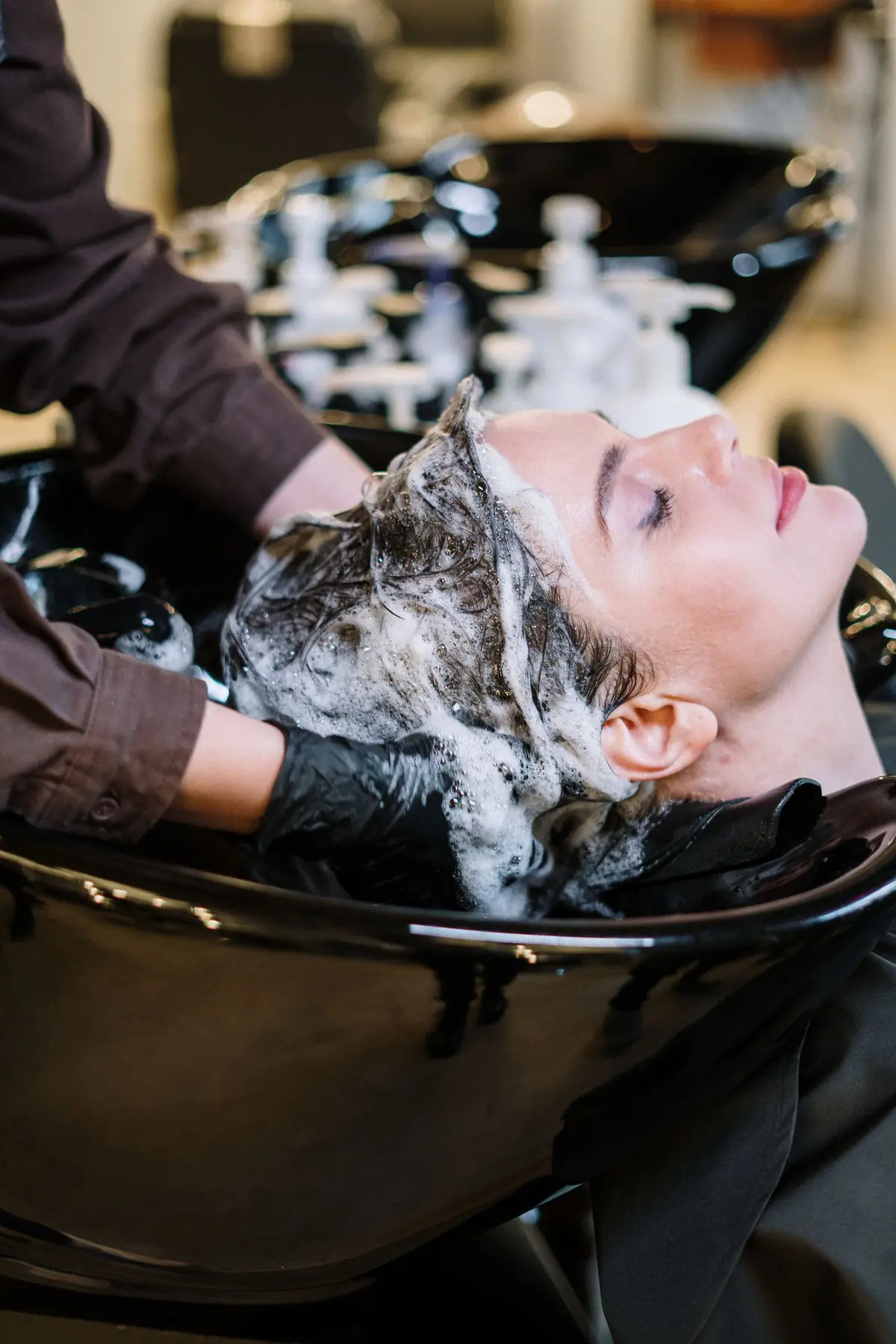
A creambath coats your hair, a hair spa conditions it more deeply, and a Japanese head spa cleanses and massages the scalp underneath it. In Ubud as of November 2026, a creambath or hair spa is around IDR 325K, while a full Japanese head spa runs roughly IDR 600K–1.7M — at SERAYA in Singakerta, Ubud, IDR 810K for 75 minutes or IDR 495K for a 45-minute express.
The three names get used interchangeably on Bali spa menus, which is how people end up booking the wrong one. The difference is simple once you know where each treatment is actually working.
What is the difference between a hair spa, a head spa and a creambath?
The dividing line is hair versus scalp.
| Creambath | Hair spa | Japanese head spa | |
|---|---|---|---|
| Works on | Hair surface + light scalp massage | The hair strand | The scalp itself |
| Main step | Conditioning cream massaged in by hand | Deeper mask, usually with gentle heat | Double cleanse under warm running water |
| Massage | Yes — head, neck, shoulders | Usually brief | Yes — long, structured, the core of it |
| Typical length | 45–60 min | 45–60 min | 45–90 min |
| Ubud price, Nov 2026 | ~IDR 325K | ~IDR 325K | IDR 600K–1.7M |
| Book it for | Relaxation, soft hair | Dry, dull, rough hair | Tight, itchy, oily or flaking scalp |
Creambath and hair spa are both Indonesian salon treatments and the terms overlap heavily — many Ubud menus list them as one line item at one price. Indonesian beauty guides draw the distinction this way: a creambath coats and protects the hair’s outer layer and suits hair that has not been chemically treated, while a hair spa is the deeper conditioning option for hair that has gone stiff, dry or brittle. A hair mask, the third name you will see, repairs individual strands damaged by colouring or straightening and is explicitly not meant for scalp problems.
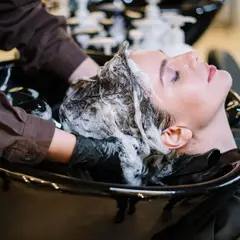
A Japanese head spa sits in a different category. It grew out of Tokyo hair salons in the 1990s, and it is closer to a facial than to hair care: the scalp is examined, cleansed twice under warm running water, then massaged for a long stretch along with the neck and shoulders. Nothing is left coating the hair at the end.
Which one should I book after a week in Bali?
If your scalp feels tight, itchy, greasy or flaky, book a head spa. A week here puts sunscreen, salt water, pool chlorine, sweat and helmet wear onto the scalp, and most of it stays there — ordinary shampooing in the shower rarely shifts it. This is the one problem a creambath cannot solve, because it adds product to a scalp that is already carrying too much.
If your hair is dry, frizzy or rough but your scalp feels fine, book a hair spa or creambath. The damage is along the strand, that is where these treatments work, and you will pay roughly a third of the price. Spending IDR 810K on a head spa to fix sun-dried ends is the wrong tool.
If both, do them in that order: head spa first, conditioning treatment after. Cleansing before conditioning lets the conditioner reach the hair instead of sitting on top of the day’s sunscreen.
If you mainly want to be looked after for an hour, any of the three delivers that, and a creambath is the cheapest route to a proper head, neck and shoulder massage on this island.
How can I tell a real head spa from a creambath with a new name?
Four things, and you can check all of them on the menu before you book.
- Running water. A head spa cleanses the scalp under warm running water, usually at a dedicated basin, often twice. If the treatment is described only as cream applied and rinsed, it is a creambath.
- Someone looks at your scalp first. Real head spa menus mention a scalp check — by eye, under a lamp, or with a camera. If nobody looks, nothing is being tailored.
- Time. Forty-five minutes is an express head spa and ninety is a full ritual. A 30-minute treatment at a 30-minute price is a creambath, whatever it is called.
- What is left in your hair. A head spa ends with a clean, light scalp and nothing coating the hair. If you leave with product still in, that was a conditioning treatment.
None of this makes a creambath a lesser treatment. It is excellent at what it does and it is one of the genuine pleasures of a Balinese salon. The problem is only ever paying head spa prices for it.
Why do Ubud menus mix the names up?
Because the terms arrived from three different places. Creambath is Indonesian and has been on salon menus here for decades. Hair spa came through Indian and Southeast Asian salon chains. Head spa is Japanese, arrived most recently, and carries the highest prices — so the name migrated onto menus faster than the technique did.
The practical consequence for you: read the description, not the heading. A Balinese spa listing “head spa” for IDR 150K is almost certainly offering a creambath, and a listing calling itself “hair spa” at IDR 800K may well be running a full Japanese protocol. The price tells you more than the word does.
What we do
Our head spa in Singakerta follows the Japanese protocol: scalp check, double cleanse under running water, a long scalp, neck and shoulder massage, then a rinse and dry — 75 minutes for IDR 810K, or 45 minutes for IDR 495K. We do not offer creambath, and if what your hair needs is conditioning rather than a scalp cleanse, we will tell you so rather than sell you the longer treatment.
For what the session itself is like minute by minute, see Japanese head spa in Ubud: what to expect.
Quick answers
What is the difference between a hair spa and a head spa?
A hair spa treats the hair itself — a conditioning cream or mask applied along the strands, usually with gentle heat, to soften dry or dull hair. A Japanese head spa treats the scalp, cleansing it under warm running water and following with a long scalp, neck and shoulder massage. One is hair care, the other is skin care that happens to be under your hair. If your hair feels rough, book a hair spa. If your scalp feels tight, itchy or greasy, book a head spa.
Is creambath the same as a head spa?
No. Creambath is an Indonesian salon treatment in which a conditioning cream is worked into the hair and scalp by hand, usually with a relaxing massage of the head, neck and shoulders, then rinsed out. It coats the hair's outer layer and feels wonderful, but it does not deep-cleanse the scalp and uses no running-water cleanse or scalp diagnosis. A head spa is a longer, scalp-focused treatment that costs roughly two to three times more.
How much do they cost in Ubud?
As of November 2026, published menus in Ubud put a hair creambath or hair spa at around IDR 325,000. Full Japanese head spa rituals in Bali run roughly IDR 600,000 to 1,700,000, with shorter express versions from about IDR 400,000 to 500,000. At SERAYA in Singakerta, Ubud, the 75-minute head spa ritual is IDR 810,000 and the 45-minute express is IDR 495,000.
Which should I book if my scalp is oily and itchy after a week in Bali?
A head spa. Sunscreen, salt water, pool chlorine, sweat and helmet wear all build up on the scalp, and that is exactly what the double cleanse under running water is designed to remove. A creambath adds more product to a scalp that already has too much on it, which can leave it feeling heavier rather than cleaner.
Which should I book if my hair is dry and frizzy from the sun?
A hair spa or a hair mask. These work along the strand, where sun and salt damage actually is, and cost less than a head spa. If both your hair and scalp need help, a head spa followed by a conditioning treatment is the usual order, because cleansing first lets the conditioner do its work.
Do I need to wash my hair before any of these?
No, for all three. Arrive as you are, even straight from the pool or a scooter ride. Removing sunscreen, salt and chlorine is part of the treatment, and your hair is washed and dried as part of the session.